Organisations are consolidating more data than ever before. Finance, sales, operations and customer service increasingly rely on a shared data platform to support reporting, analytics and business decision-making. Bringing data together creates new opportunities for collaboration and insight, but it also introduces a new challenge.
So how do you ensure that everyone is working with trusted data?
Without clear visibility into where information comes from, who has access to it and which datasets can be relied upon, even the most modern data platform can quickly become difficult to manage. Duplicate reports appear, different departments work with different versions of the same data and confidence in business reporting starts to decline.
This is where data governance becomes essential. Rather than approaching governance as an afterthought, Microsoft Fabric includes several built-in capabilities that help organisations secure, manage and monitor their data environment from a single platform.
Let's explore some of the key governance capabilities that help organisations build a trusted and scalable data foundation.
1. Governance starts with transparency
One of the first principles of good data governance is understanding where your data comes from.
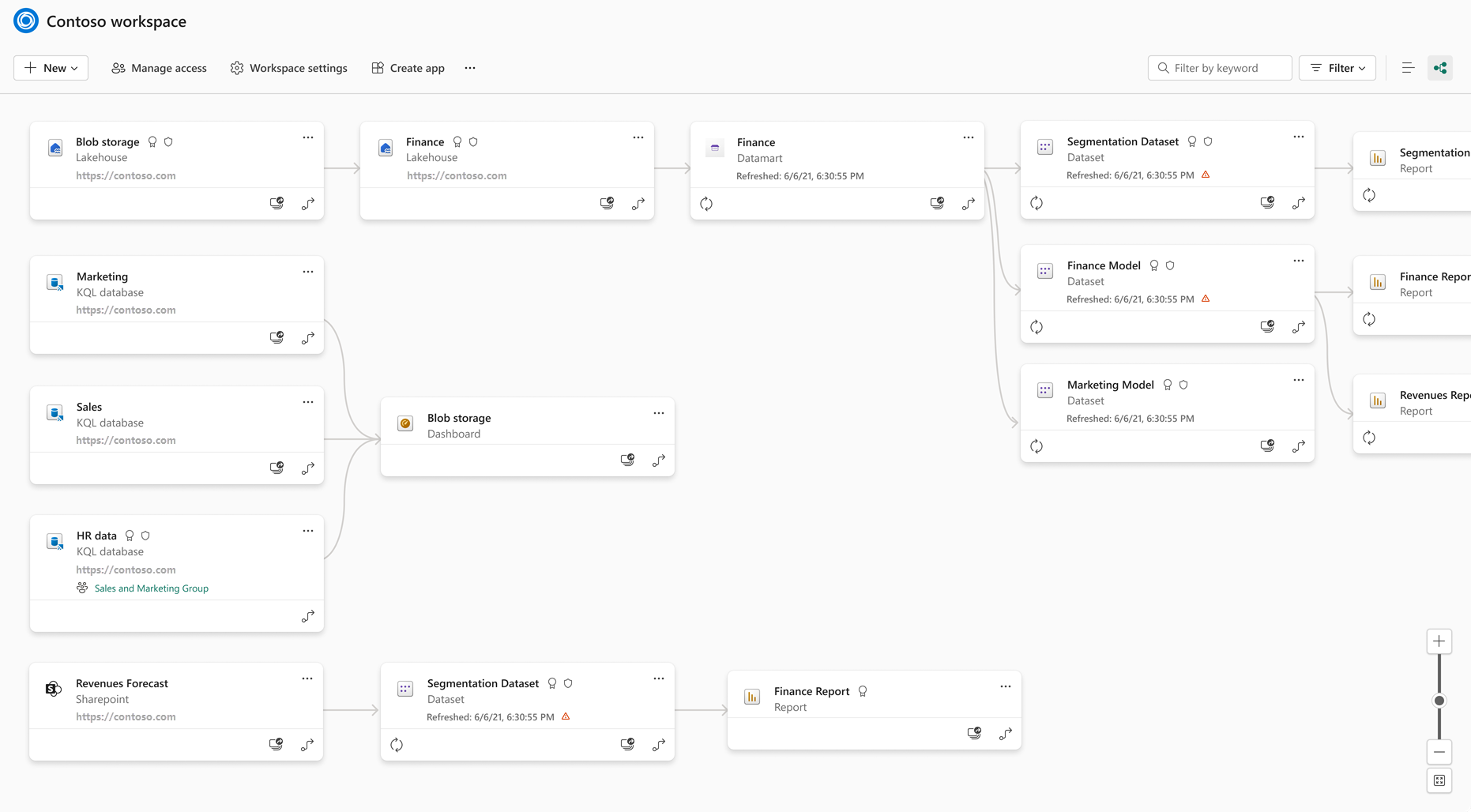
Microsoft Fabric automatically captures data lineage, providing a visual overview of how information flows from source systems through transformations to datasets and reports.
When a KPI is questioned or a report produces unexpected results, teams can quickly trace the complete data journey. Instead of relying on assumptions or manual investigation, they gain clear visibility into how information was created and transformed.
That transparency not only simplifies troubleshooting, but also strengthens confidence in business reporting.
2. Governance requires consistent protection
Not every dataset should be accessible to everyone. Financial information, customer data and confidential business documents all require different levels of protection. As organisations increasingly share data across teams, maintaining consistent security becomes essential.
Microsoft Fabric integrates with Microsoft Purview sensitivity labels, allowing organisations to classify and protect data using the same governance policies applied throughout Microsoft 365.
Because these labels remain attached to the data as it moves through the Microsoft ecosystem, organisations can apply security consistently without creating additional complexity for end users.
3. Governance depends on visibility
Governance isn't just about controlling access. It also requires understanding what is happening across the platform.
Microsoft Fabric's Monitoring Hub provides administrators with a central overview of pipelines, notebooks, refreshes and workloads. This makes it easier to identify failures, monitor platform health and ensure critical business processes continue to operate reliably.
The more visibility organisations have into their platform, the easier it becomes to maintain control as data environments continue to grow.
4. Governance makes trusted data easier to find
One of the biggest causes of inconsistent reporting isn't poor data quality, but rather duplicate data. When employees can't identify which dataset is the official version, they often create new reports and semantic models themselves. Over time, multiple versions of the truth begin to emerge.
Microsoft Fabric helps address this through endorsement, allowing organisations to promote or certify trusted datasets. Instead of wondering which report is correct, business users can easily identify approved data assets, encouraging reuse and reducing unnecessary duplication.
5. Governance becomes easier with a central data foundation
Managing governance across disconnected platforms quickly becomes complex.
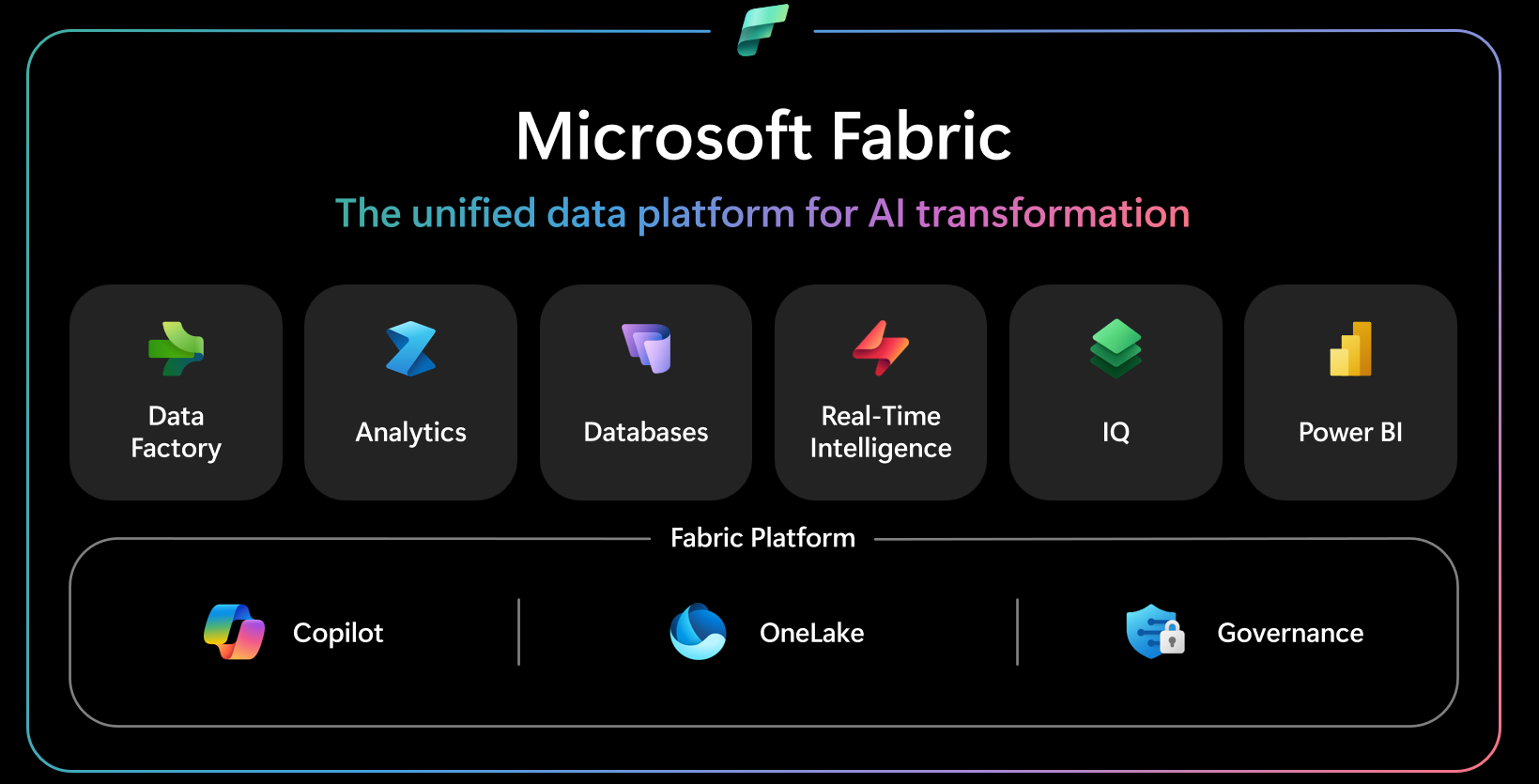
That's why Microsoft Fabric is built on OneLake: a single logical data lake that serves every Fabric workload.
Rather than copying data between different systems, organisations can centralise their information while reducing duplication, simplifying governance and improving consistency across analytics and reporting.
A single source of truth doesn't automatically solve governance challenges, but it provides the foundation needed to manage them effectively.
6. Governance relies on the right access controls
Even the best governance strategy depends on ensuring the right people have access to the right information.
Microsoft Fabric builds on Microsoft's existing identity and security model, allowing organisations to manage workspace and item permissions through familiar Microsoft security controls.
This enables businesses to maintain granular access without introducing unnecessary administrative complexity, helping sensitive information remain protected while ensuring employees can still access the data they need.
7. Technology enables governance. People make it successful.
While Microsoft Fabric provides powerful governance capabilities, technology alone doesn't create good governance.
Organisations still need clear ownership of their data, well-defined policies and agreed responsibilities across the business. Governance is as much about people and processes as it is about technology.
Microsoft Fabric provides the foundation to support that governance model by bringing transparency, security and centralised data management together in a single platform.
Building trust in your data
Data governance is often perceived as something that slows organisations down. In reality, it does the opposite. When employees know which data they can trust, when administrators understand how information moves through the platform and when security is embedded from the start, organisations can innovate with far greater confidence.
That foundation becomes even more important as organisations introduce AI into their data environment. As we explored in our article on Copilot in Microsoft Fabric, AI can make it easier to explore data and uncover insights, but its value ultimately depends on the data behind it.
Microsoft Fabric doesn't simply centralise data. It helps organisations create an environment where trusted information supports better reporting, more reliable analytics and, increasingly, AI-powered ways of working.
Because whatever you build on top of your data, trust has to come first.
Want to build a data environment your organisation can truly trust?
👉 Whether you're already using Microsoft Fabric or exploring how it could fit into your data strategy, we're happy to help you build the right foundation.
 |
|
Arne Vermeulen |